It started with a dream.
It started with a dream.
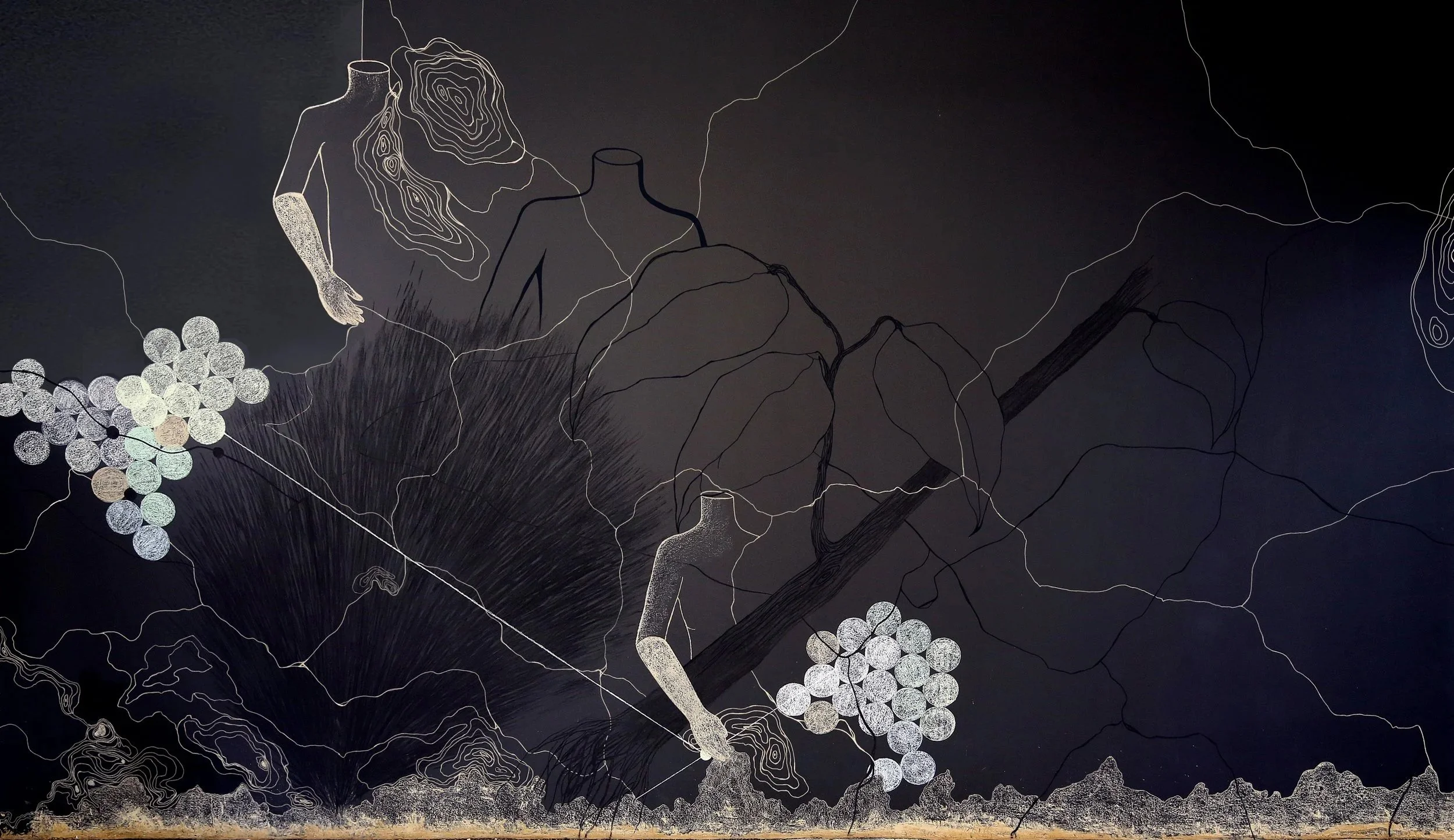
It started with a dream.
The dream envisioned an entity that supported territories and communities in their pursuit of subsistence. Its structure and operating principles enabled it to act in response to the people, places and needs they expressed.
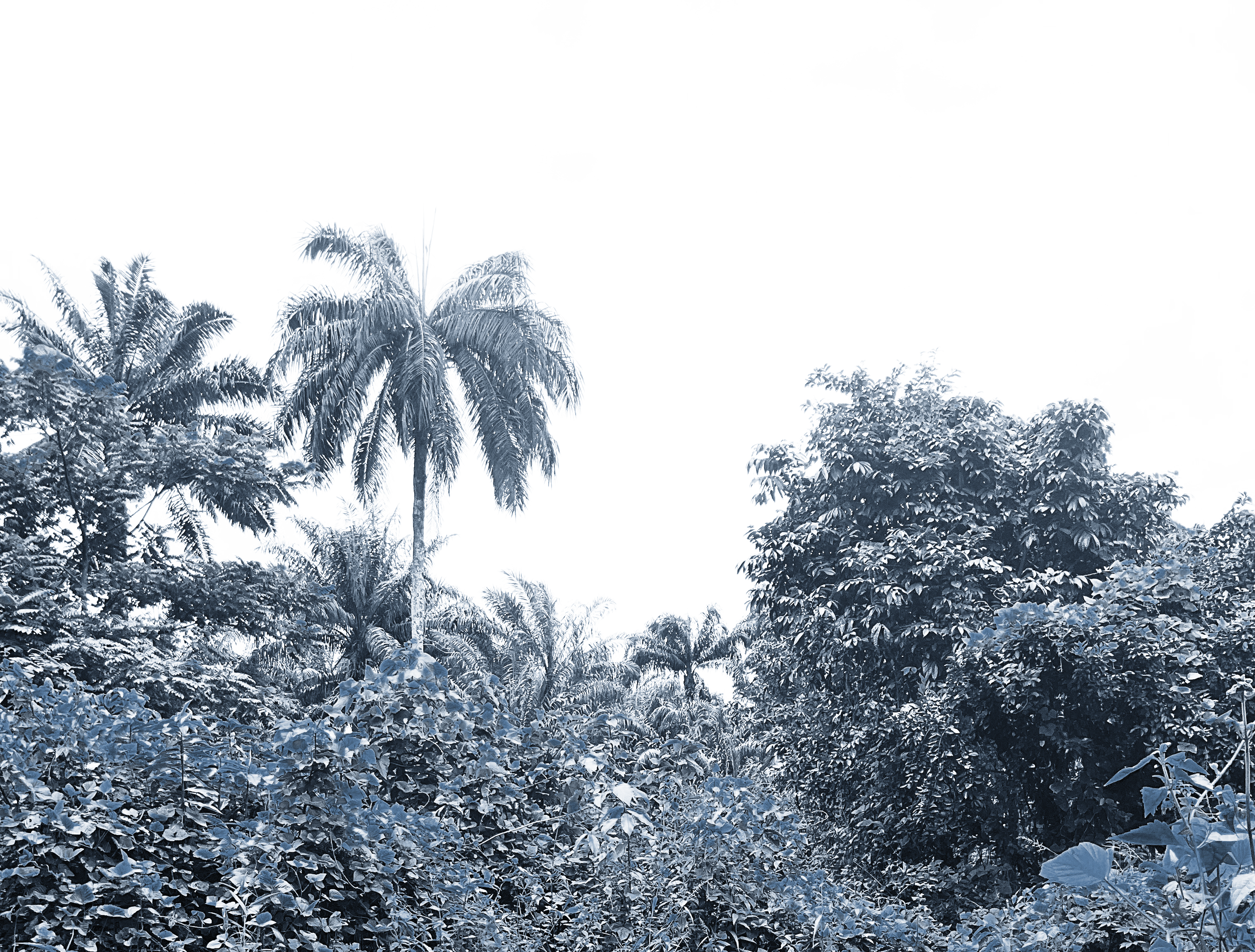
Through its support for ethically committed initiatives in the cultural and economic development of their localities, its actions highlighted the interdependence of all things.
In the dream, Carved to Flow did not exist as it does now. It was shaped and continues to be shaped by encounters with people, places, living and non-living entities. It rose in conversations, in embraces, in waiting and in doubt. It was consolidated through research and trials, until it found its final form: that of being in constant evolution, continually attuned to its environment.
It is the story of Otobong Nkanga’s dream. One she chose to share, first in the middle of the night, to her closest partner. It took shape in these words: how can one build something malleable enough to hold life in all its form, respects the specificities of territories and addresses the collapse economy and ecology ?
-
Then the dream travelled. Otobong shared it with a collaborator who is also a friend, because borders do not always make sense, and some bonds ignore them altogether. In conversation with Koyo Kouoh, the dream began to refine its contours and to find its purpose.
What structure should be given to this entity, whose essence lies in its awareness of the interconnectedness between human beings and their natural environment, and of the effects generated by their exploitation and circulation? So the search began, through buildings of the past and of the present, to find which structure could host this organism. The Musgum architecture of Africa, where each unit is joined to the next and each holds the others up, came to the fore as the model that could let the dream take root in reality, and unfold there with autonomy and impact.
Observing and learning from how people, resources and knowledge travel and the asymmetrical effects of their movements, it became clear that this organism would have to carve its own paths. Embodying that flow is inevitable and essential, it had to let things move but to do so in a way that every passage feeds what it touches, from first step to last and back relying on circular economy and fostering an ecology of care and repair.
As Otobong Nkanga continued to live with that dream and to share it, it was another conversation with another collaborator and dear friend, Simon Njami, that allowed her to draw the last unit through which the structure could achieve its purpose.
That is how the dream gave birth to three major units that were all activated during documenta 14 in 2017.
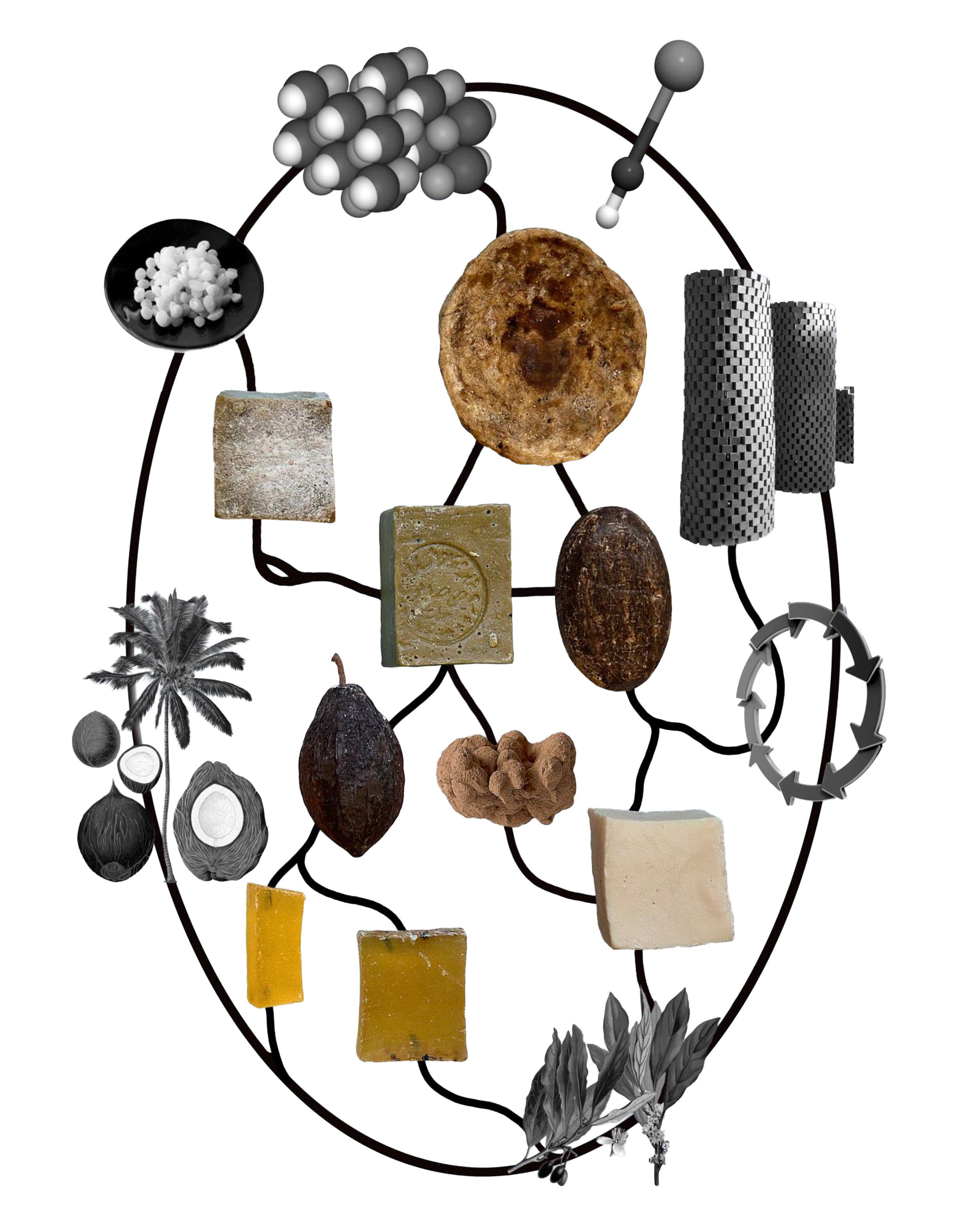
The first unit hosted a soapmaking Laboratory in Athens where visitors could witness the making of different recipes of soaps and attend events. These encounters gave shape to a sculpture in the form of a cold-process soap, O8 Black Stone made from the encounters of 7 different kinds of oil and butter from across the Mediterranean, Middle East, North and West Africa, and charcoal.
The second unit took place in Kassel and involved the Storage and Distribution O8 Black Stone soap. Presented as sculptural art work the soap bars were sold through performances that challenged the traditional transaction process.
The third unit, Germination, consisted in the creation of the Carved to Flow Foundation in Nigeria and Belgium, which would support by redistributing the proceeds from the sales of the O8 Black Stone soaps locally based and socially engaged initiatives.
Carved to Flow is not the story of a dream coming true. It is the story of an active utopia that began in a dream, and that is shaped, again and again, by the people and places it meets along its paths.
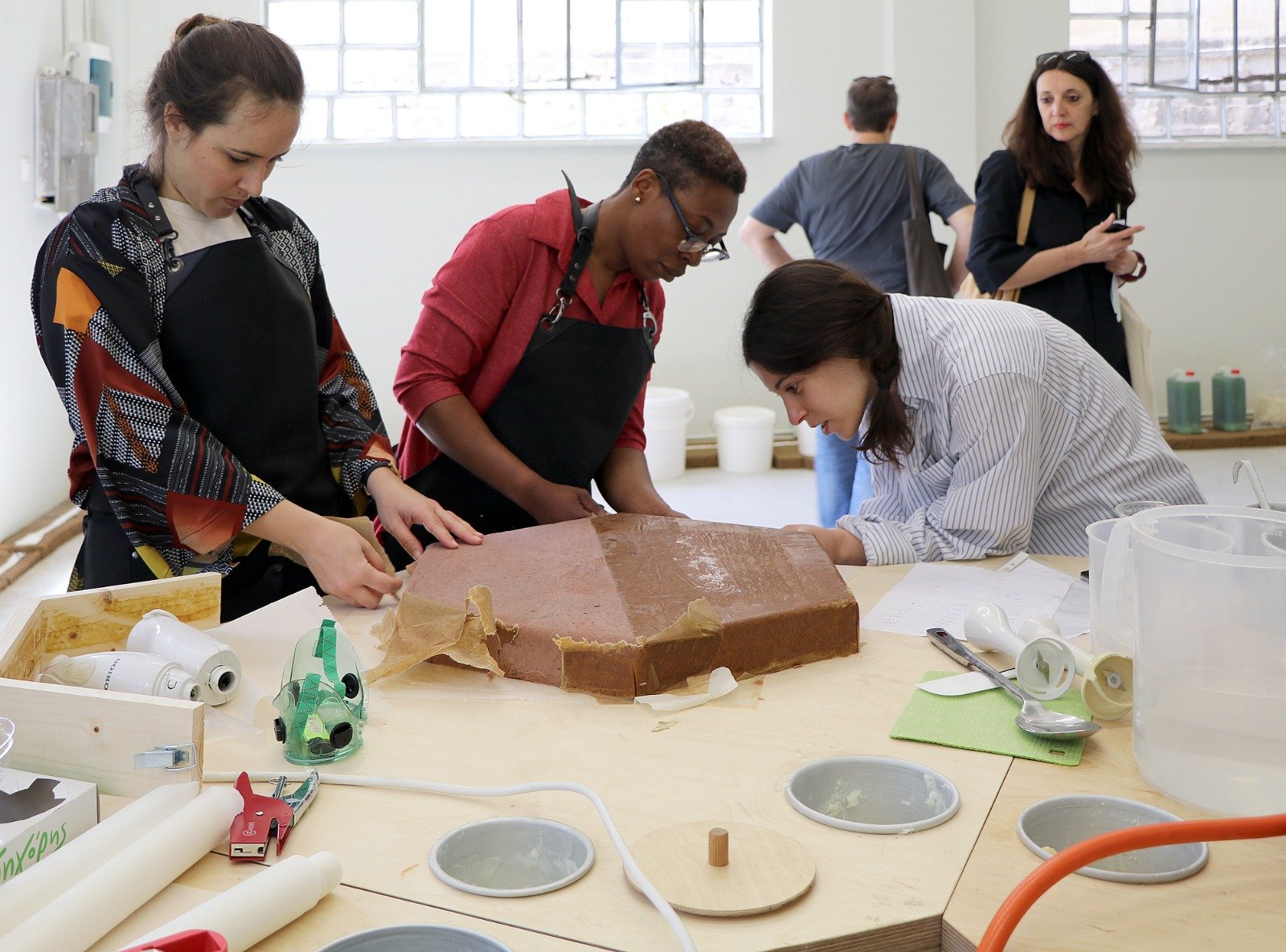
Laboratory
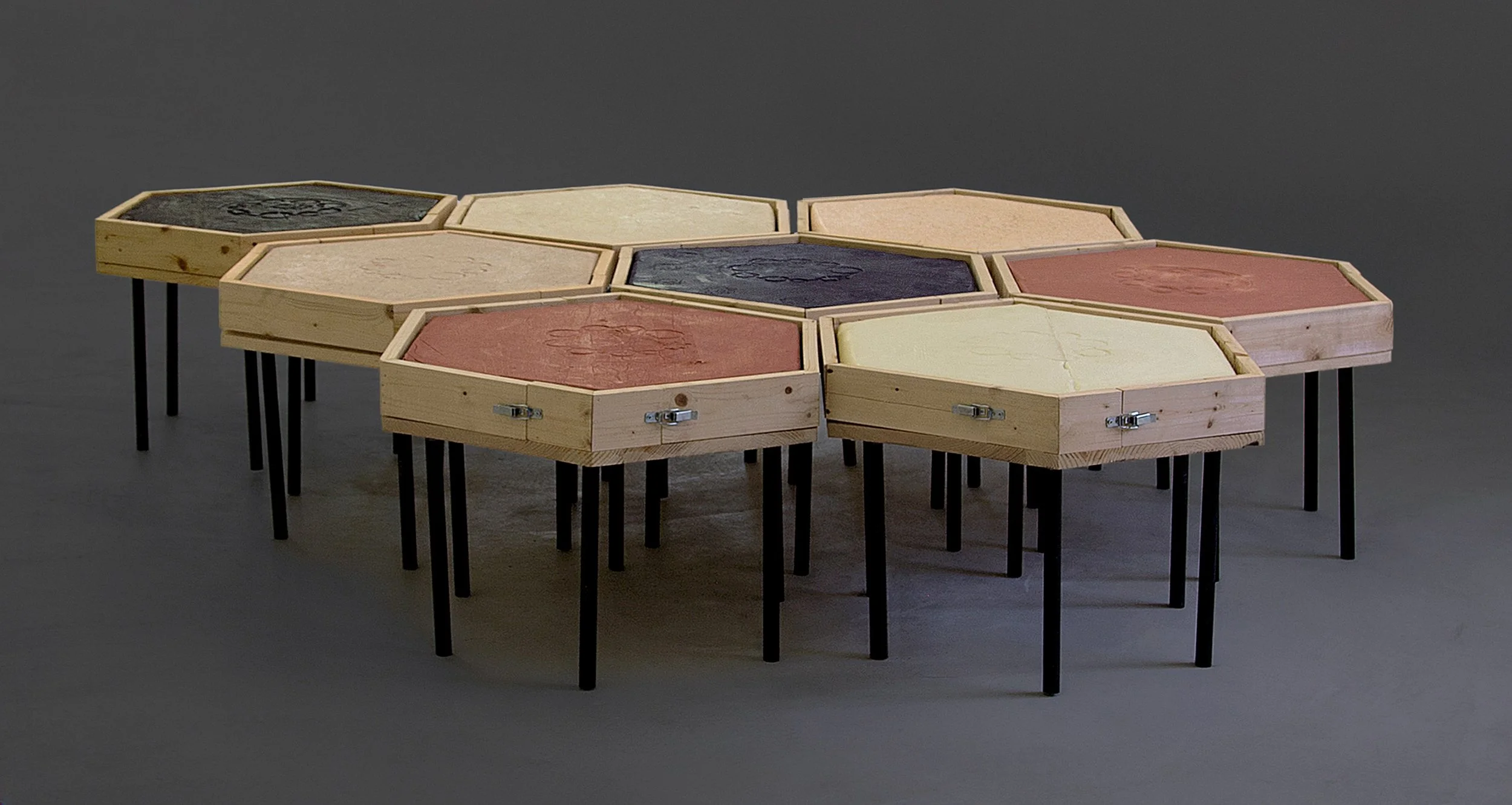
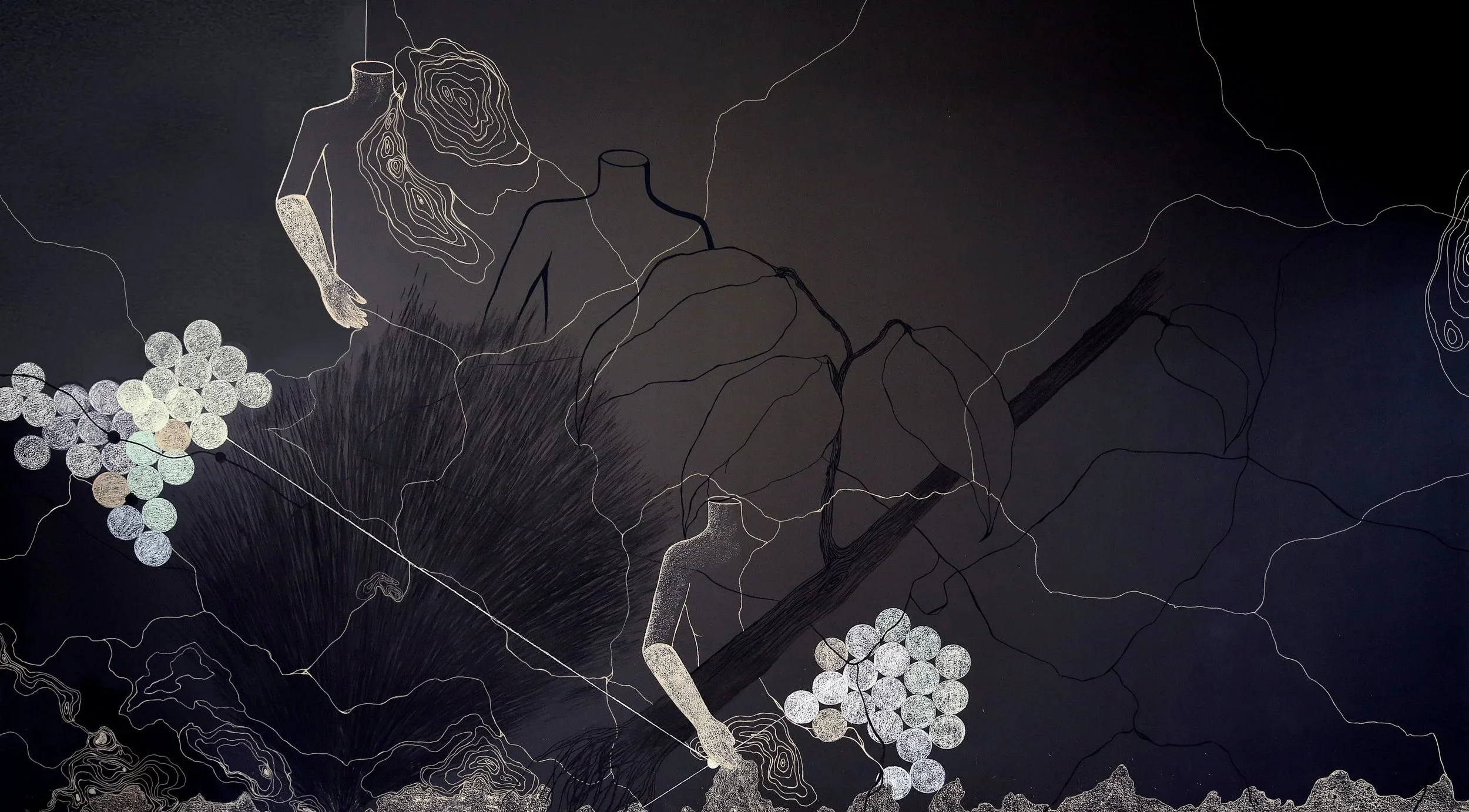
The Laboratory was a site-specific installation that worked as a soapmaking workshop and venue for public events. It existed at once as an artwork, an exhibition and a social space. It brought together a wall-drawing (“The Hand”), hexagonal soaps moulds/sculptures (“The Moulds”), a custom-made soapmaking table (“The Workstation”), a reading room (“The Brain”) as well as a web of clay channels funnelling oil. As a living entity, the Laboratory phase welcomed soapmaking sessions with the public hosted by Otobong Nkanga and soapmaker Evi Lachana and public talks curated by Maya Tounta that explore the ways artists reshape narratives around everyday products. It also saw the research that would lead to the recipe of the O8 Black Stone soap. During the third phase, Germination, the Laboratory is re-installed within exhibitions showcasing the project.
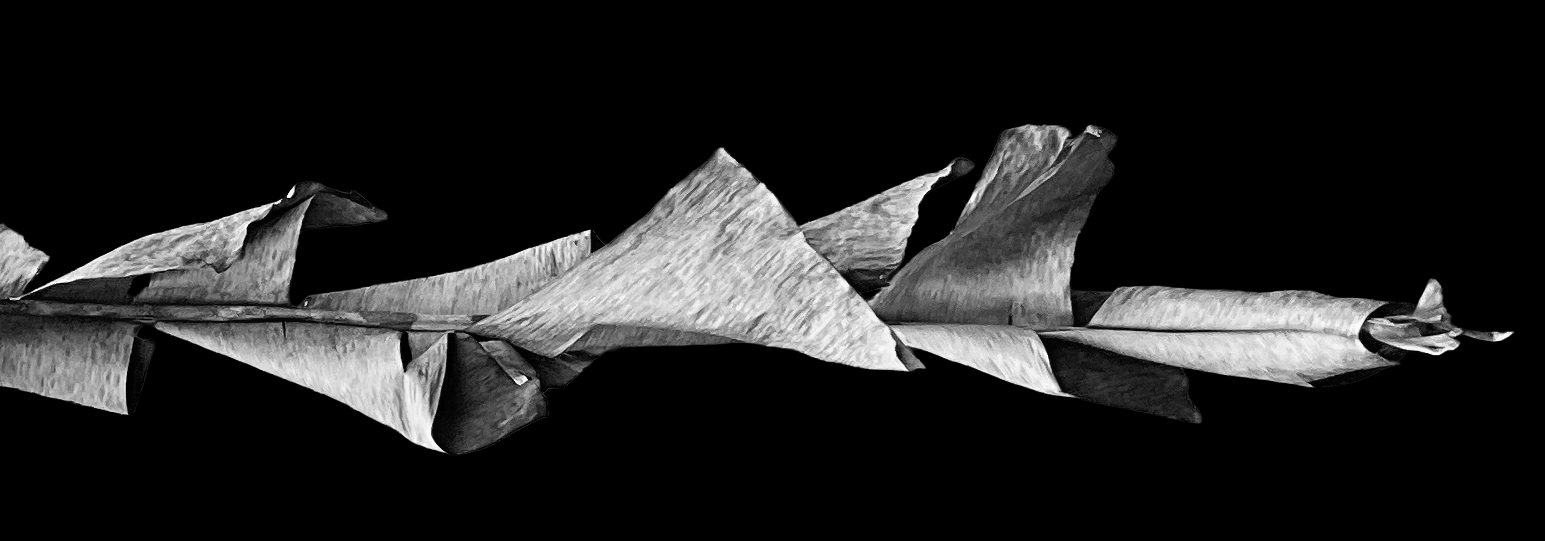
Warehouse & Distribution
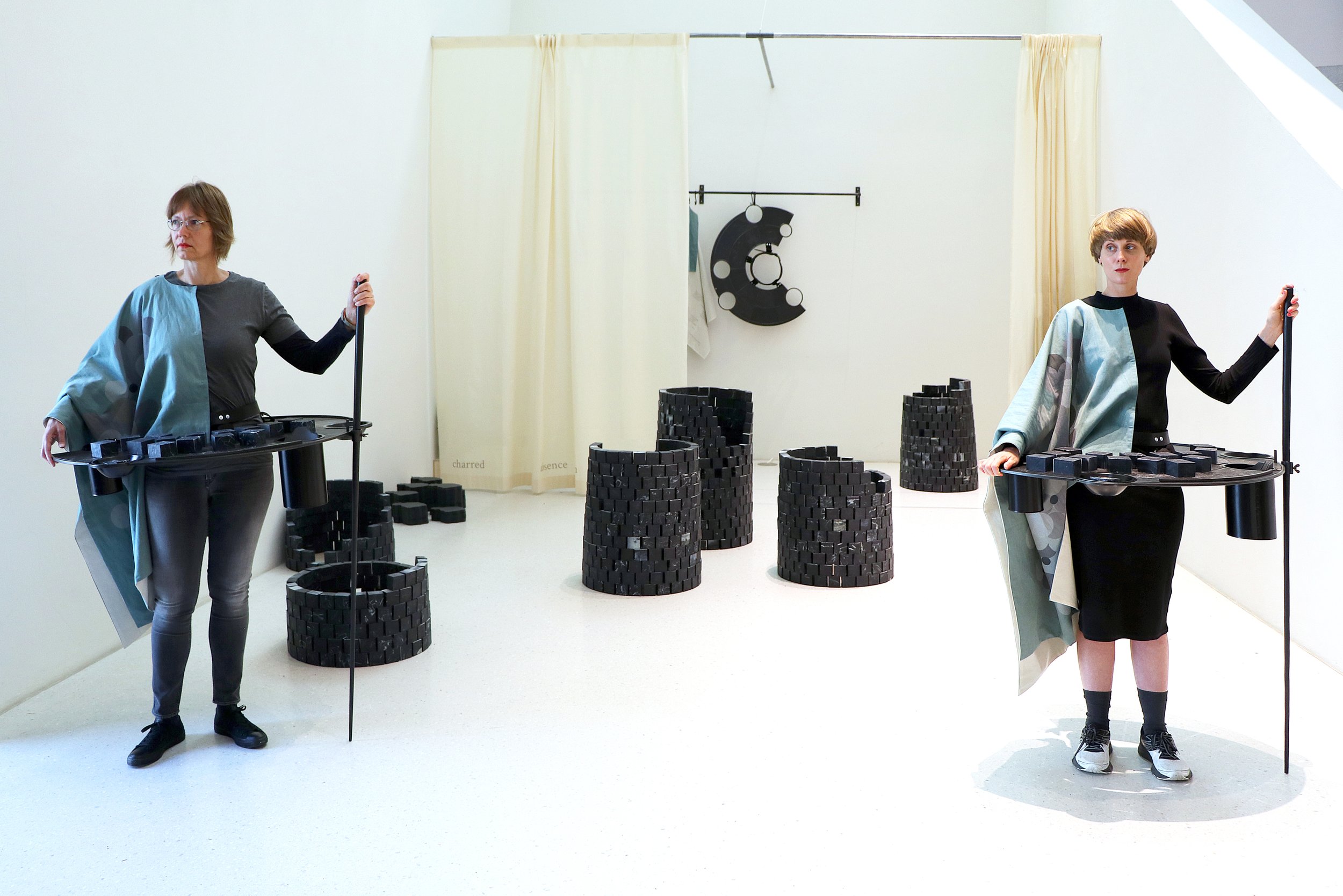
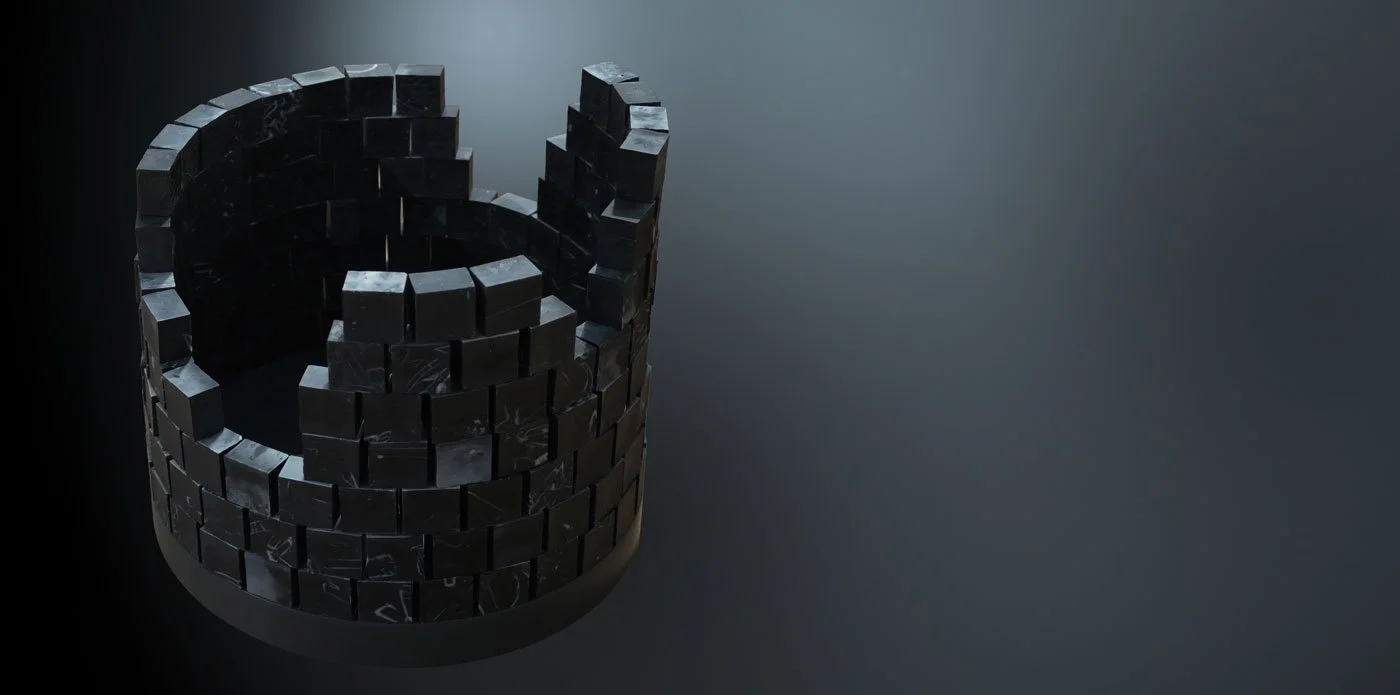
The Warehouse & Distribution constituted the first public presentation of the O8 Black Stone soap. In reference to the Aleppo and Nablus repositories, the soaps rose in circular brick-like latticed columns and vertical blocks. The distribution happened through an ongoing public performance involving a custom-made apparatus “The Carrier” designed by Nkanga as a shop founded on the body.
Each sale was both a transaction and performative gesture that centered the storing of the soap. As an unconventional ritual of exchange, a poetic and negotiated space, it gave performers liberties to set conditions. They could for instance refuse the sale to a disrespectful customer or temporary limit the selling to one bar per person. The Warehouse & Distribution phase was intended to ensure the financial and operational self-sustainability of the project, thereby paving the way for the third phase, Germination.
Germination
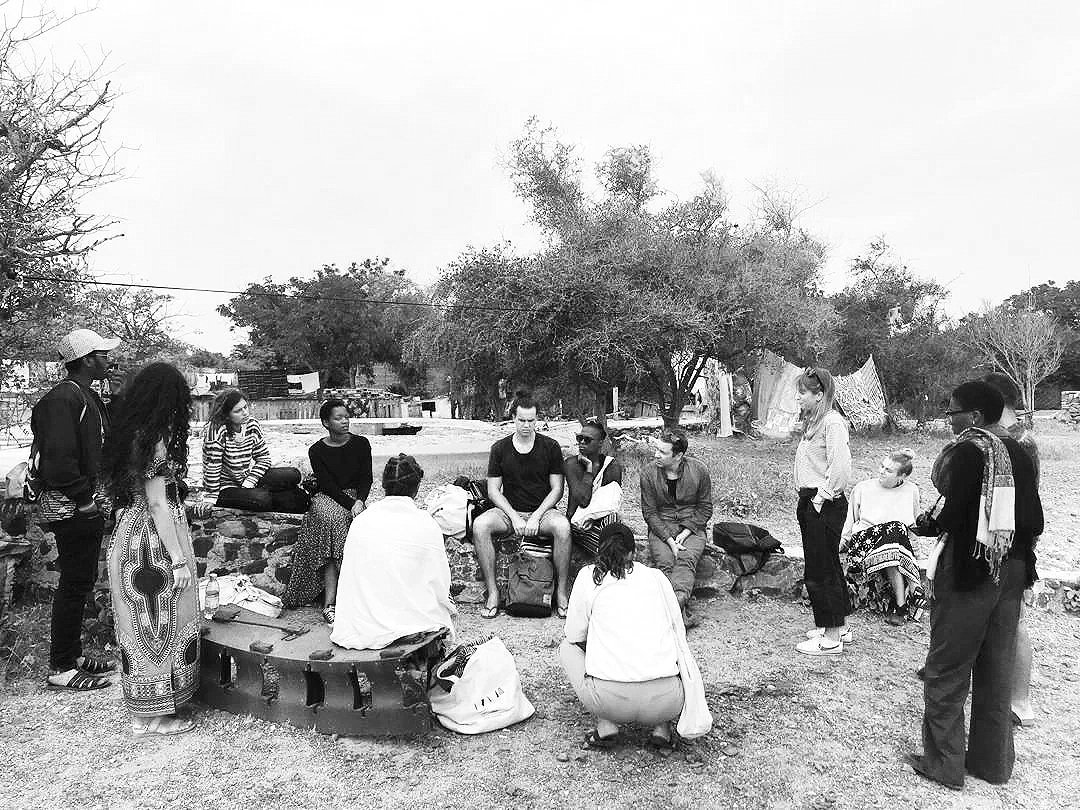
Germination, the third and last phase of the project, started in 2018 with the establishment of the Carved to Flow Foundation in Nigeria and in Belgium and remains ongoing. The Foundation operates with and redistributes the proceeds from sales of the O8 Black Stone soap. It contributed to the creation of the non-profit art space Akwa Ibom Athens, directed by Maya Tounta showcasing emerging artistic practices and historical artists. At the core of the project the ongoing development of an organic farm in Akwa Ibom state in Nigeria supports the development and preservation of local knowledge and practices.
Beyond these local initiatives, the Germination manifests in various and expanding format. These include educational and public programs, the presentation of the project within Otobong Nkanga’s exhibitions, often accompanied performances, talks and conferences, and the creation of a podcast. Together, these activities support external collaborators and structures whose practices within and outside the traditional field of arts demonstrate the interdependence of people, land, production, and the circulation of goods, knowledge and narratives.